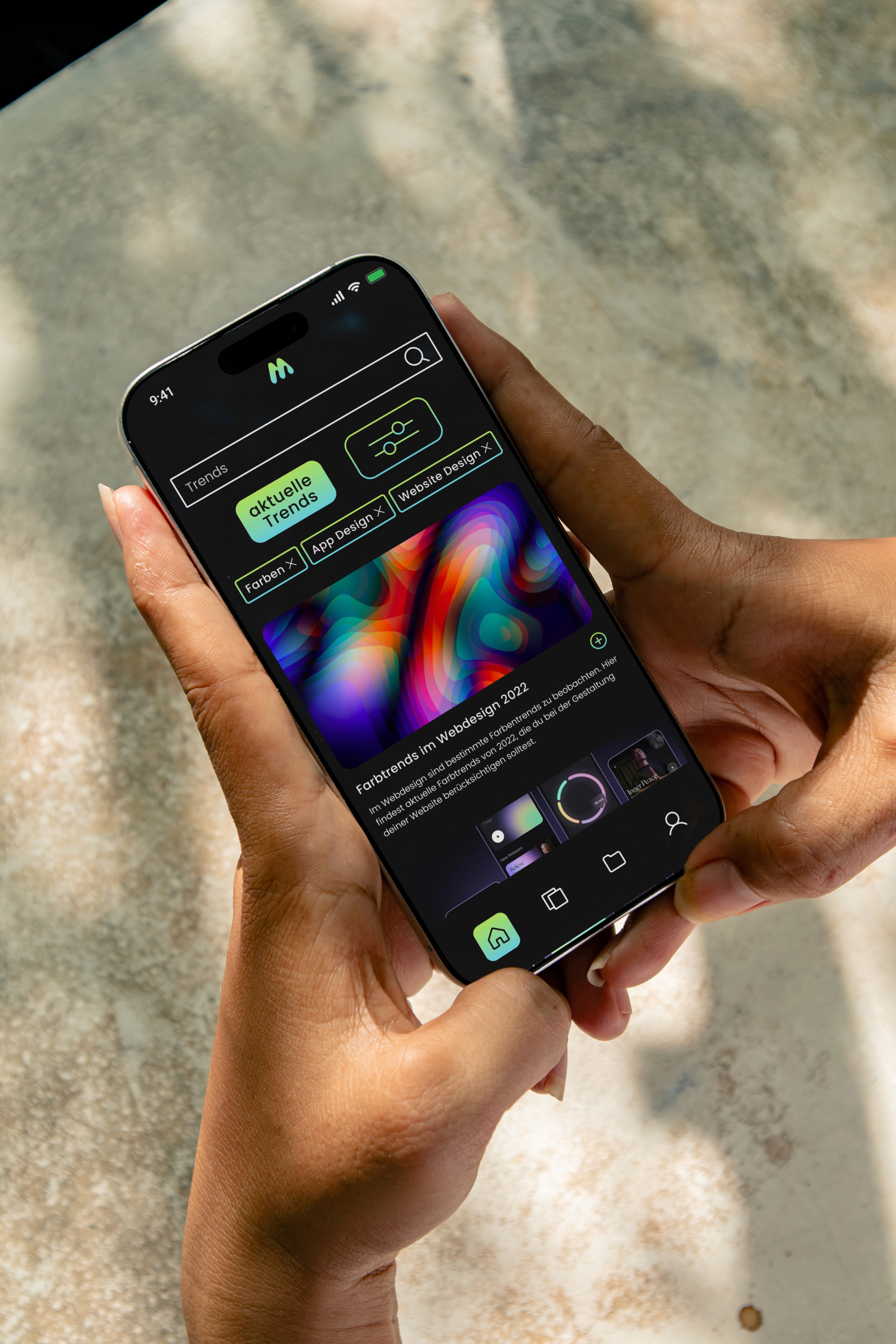
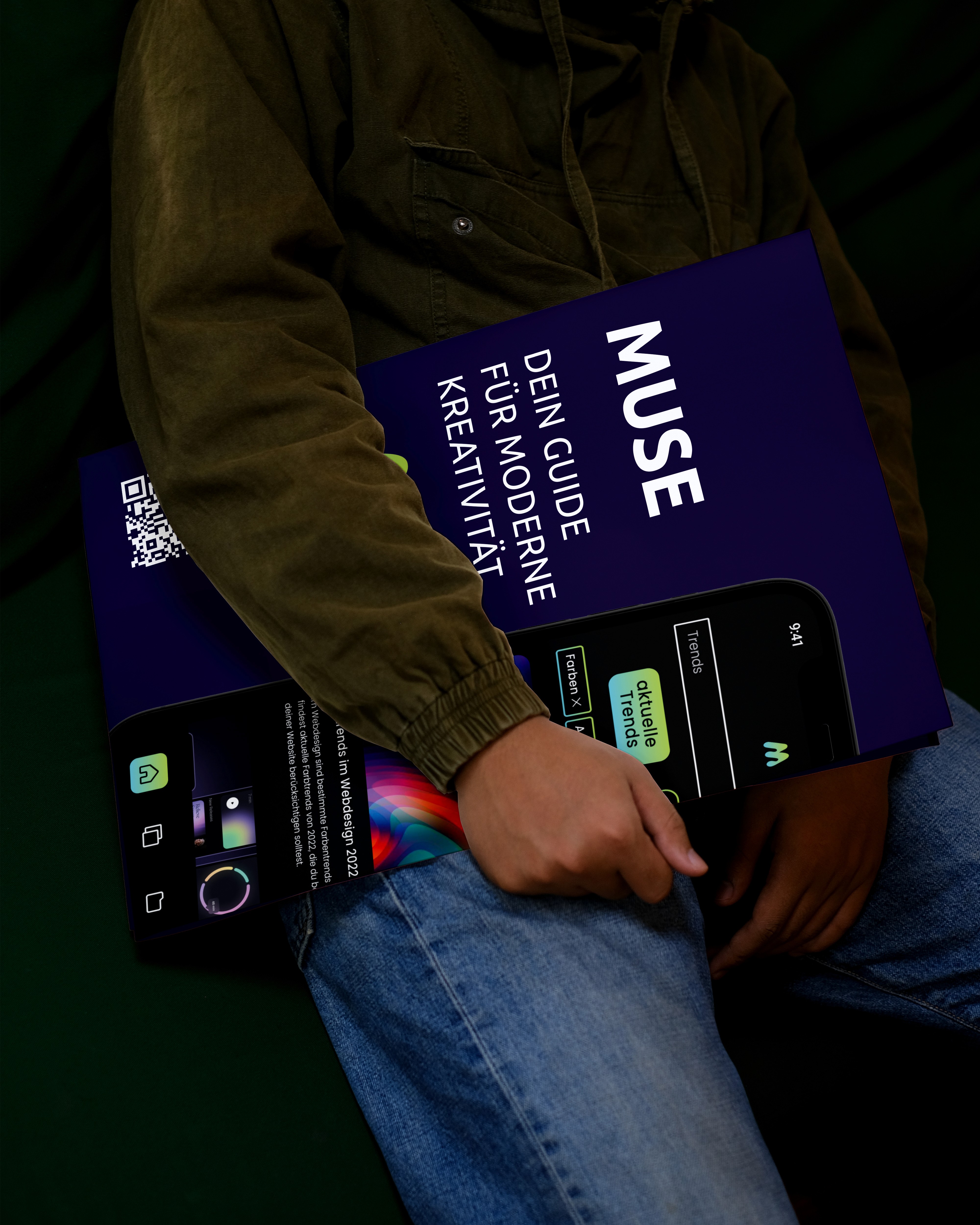
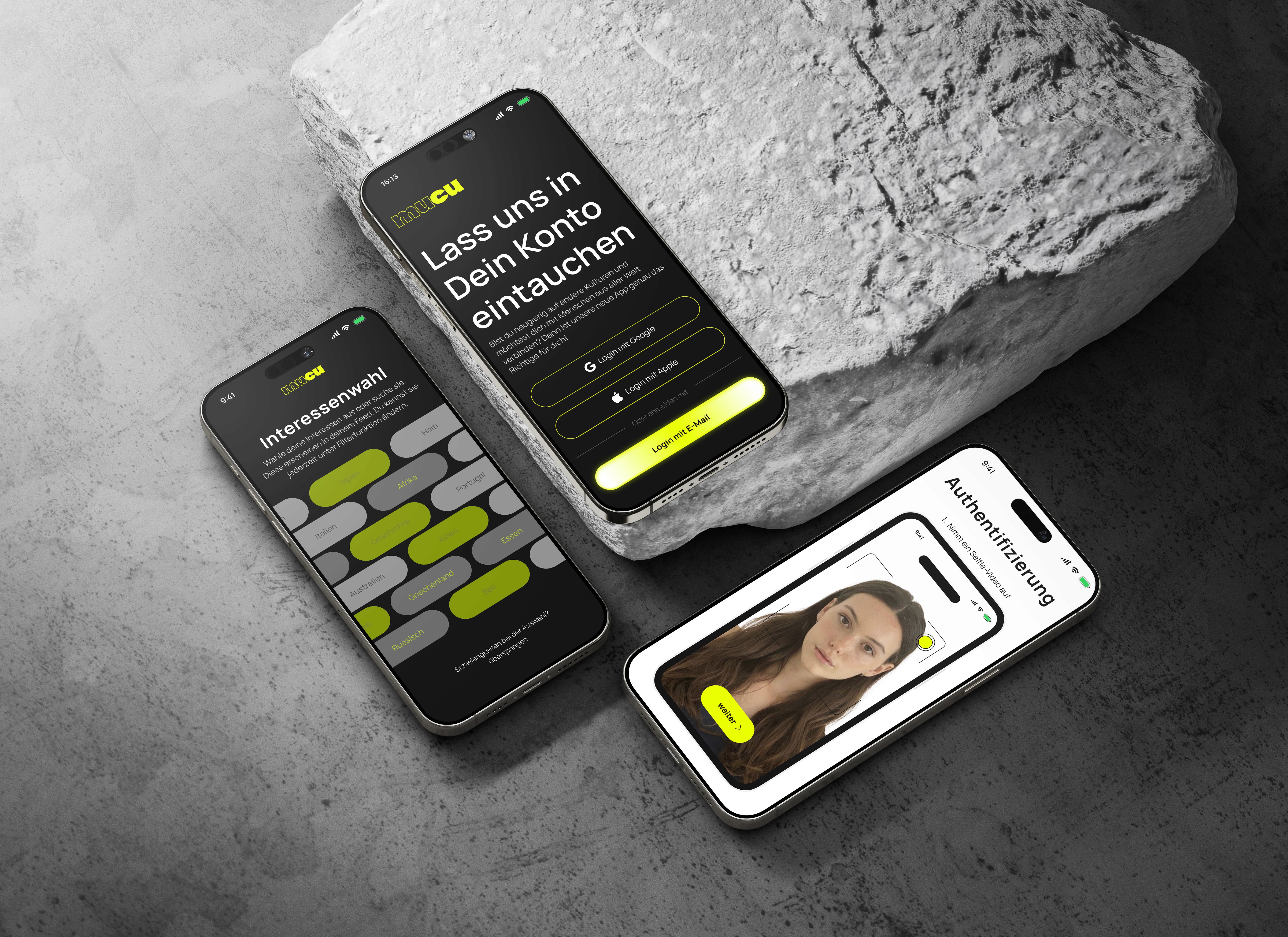
MUSE was developed collaboratively with Selina Pfeil and Regina Vargasova. I focused on information architecture, user flows, wireframing, and structuring the core UX logic, while we worked together on concept development and early ideation.
01 — Challenge
Designers rely on trends, methods, and structured research — yet these resources are scattered across countless tools.
Students and junior designers struggle to find clear, actionable research guidance.
The Challenge:
“How can we reduce research time and guide designers through early ideation in a simple, organized, and accessible way?”
02 — Process/Research
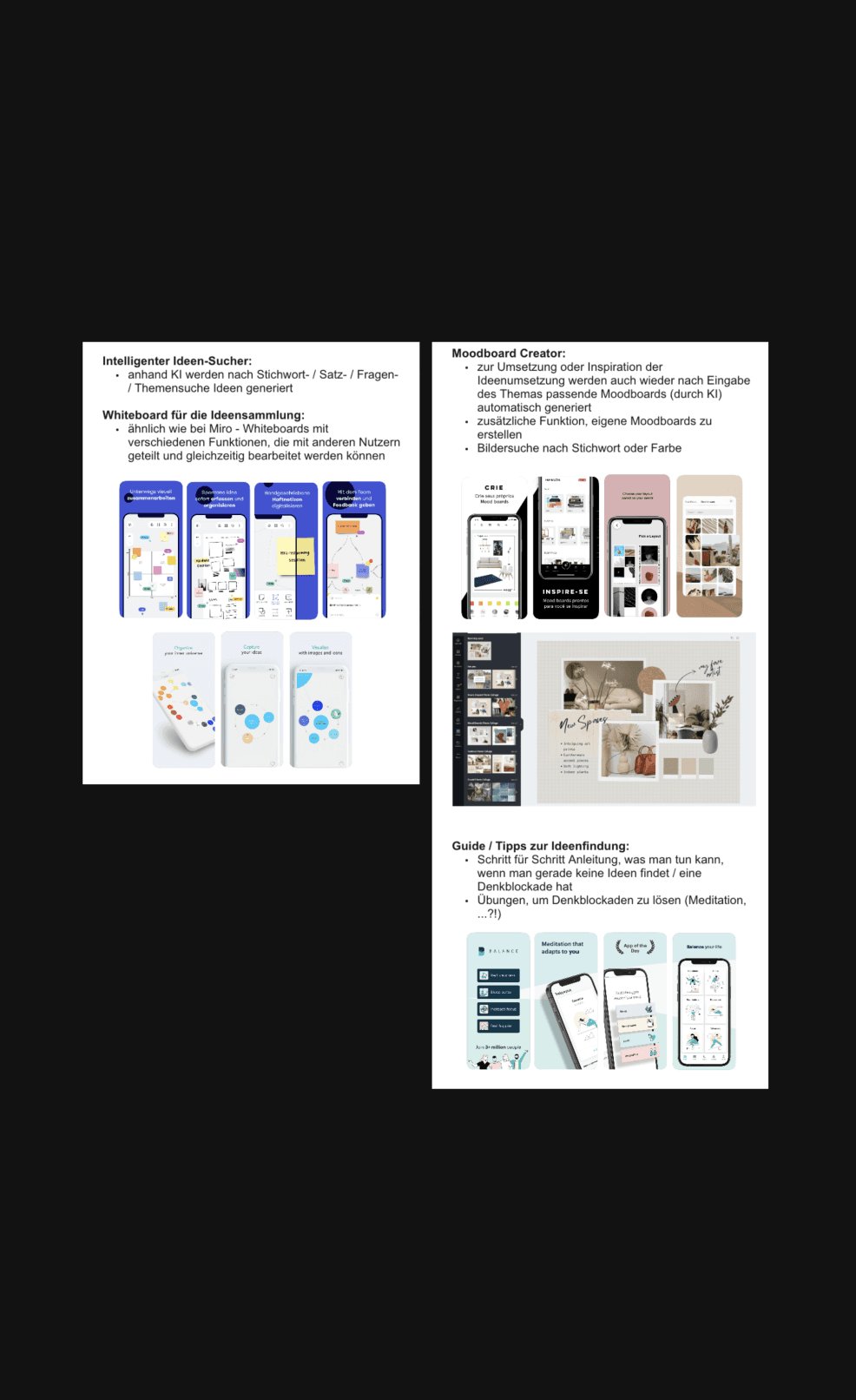
Built a feature–value matrix to define the MVP and prioritize impactful features.
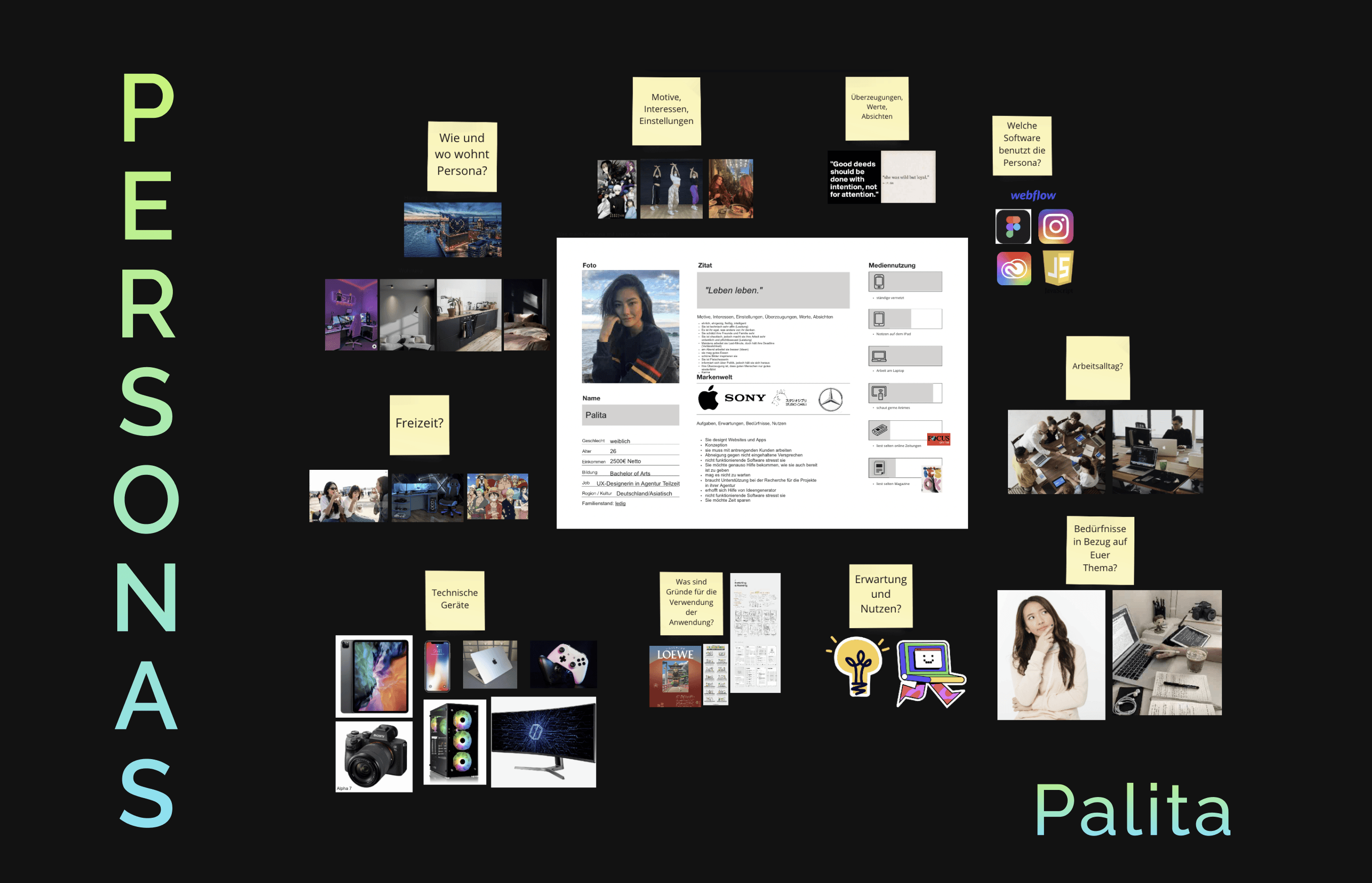
Developed a primary persona representing design students needing fast, structured research tools.
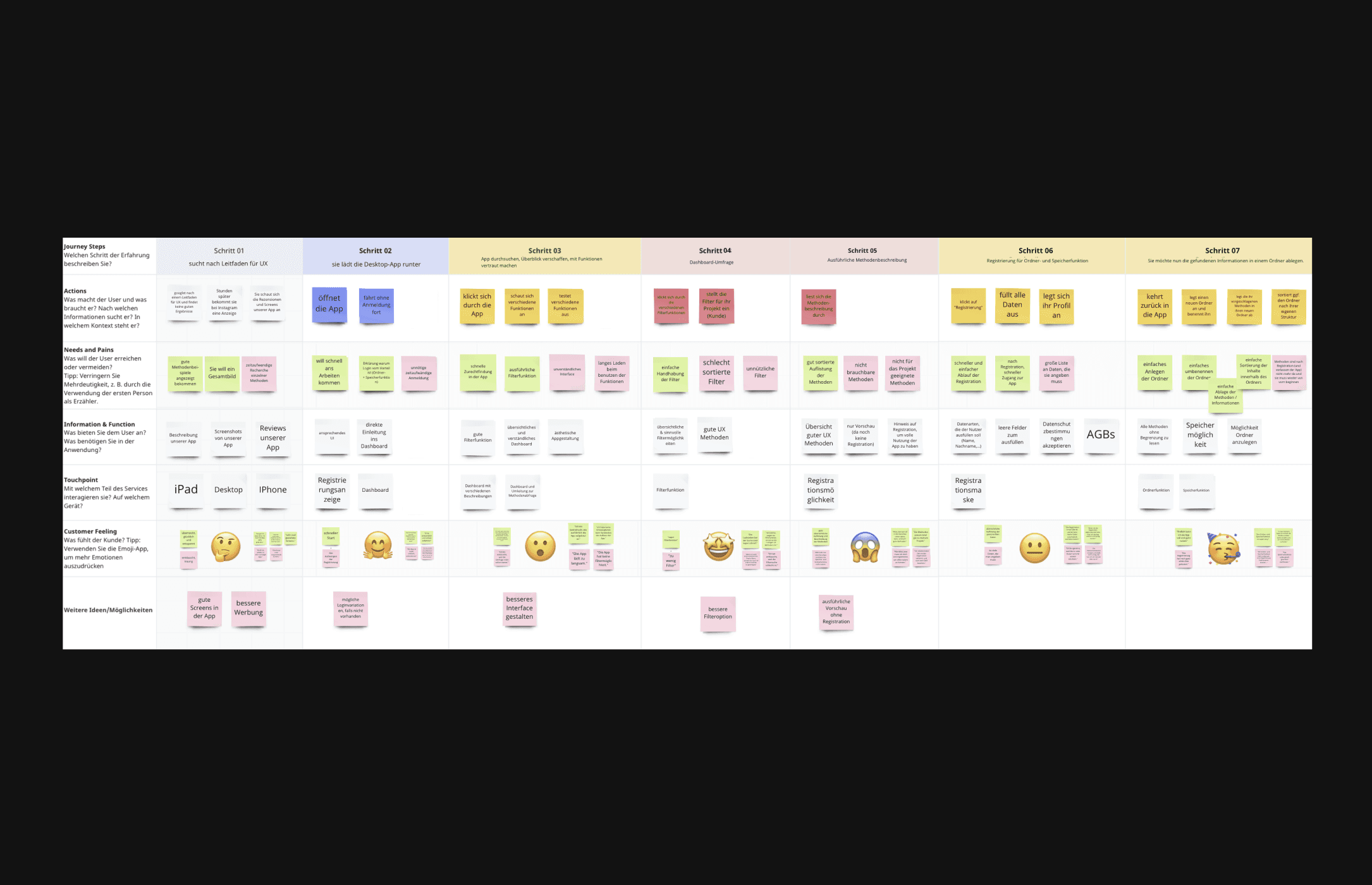
Mapped user motivations, learning behavior, and common frustrations.
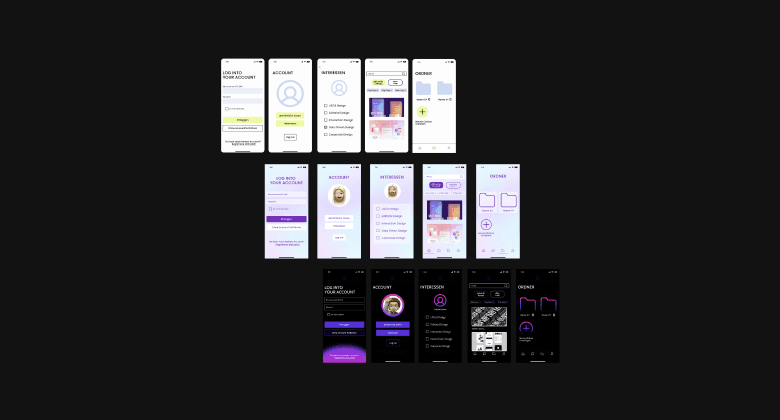
Created early wireframes and content flows to validate the structure before visual design.
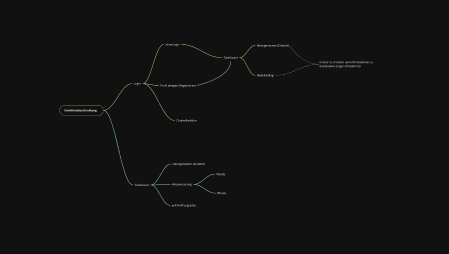
Defined a folder-based navigation system to centralize methods, frameworks, and UX knowledge.
03 — Design Systems
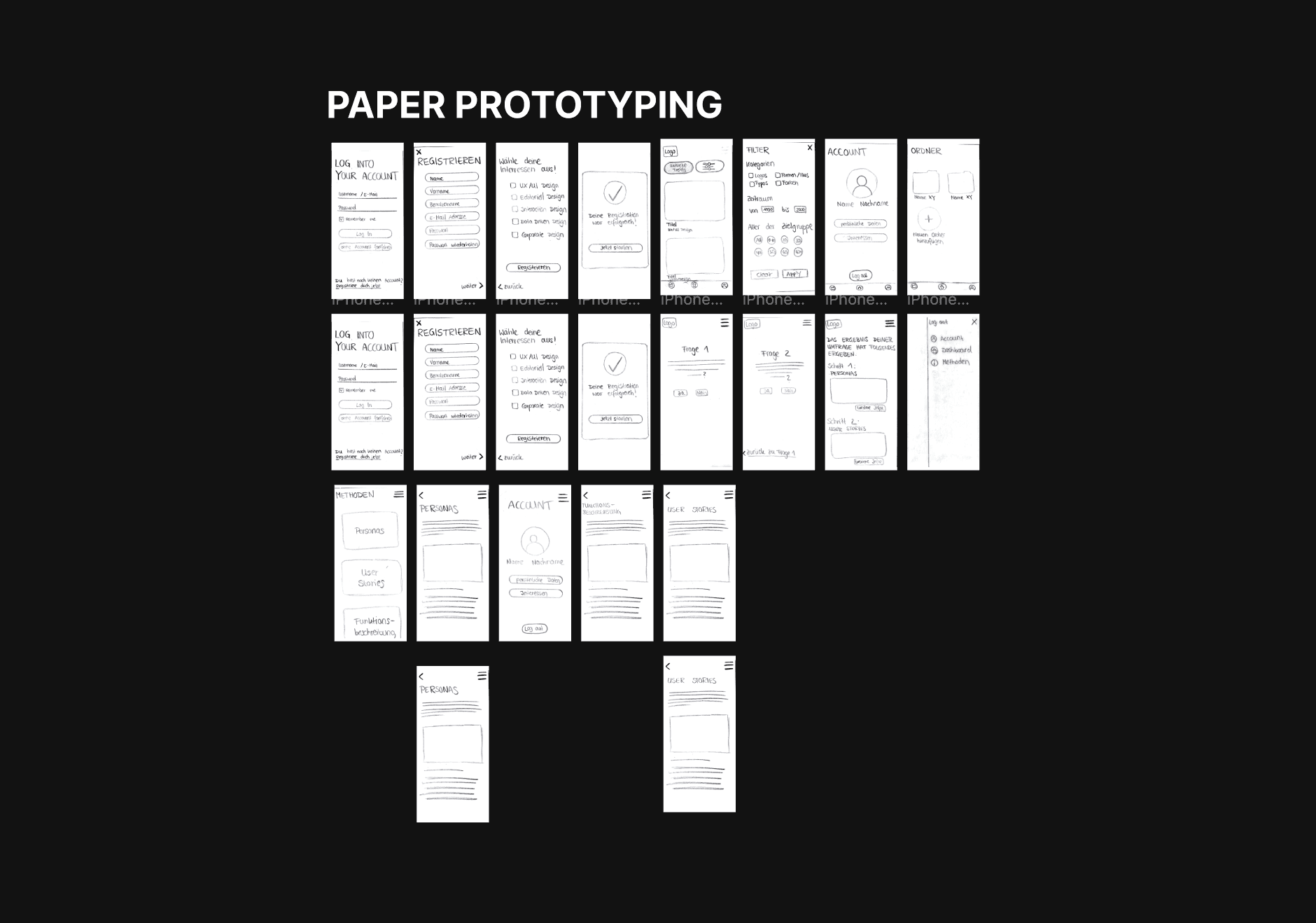
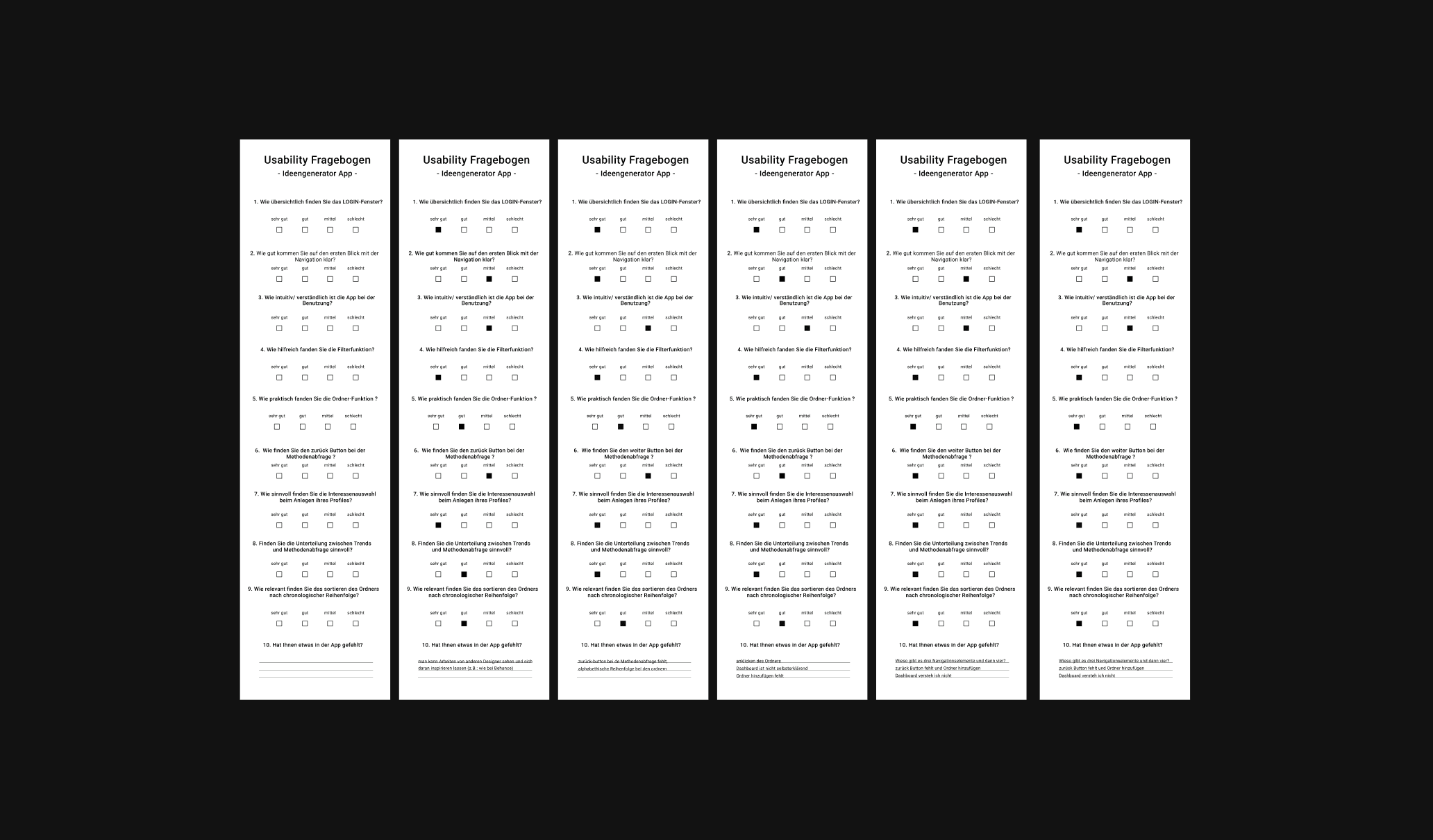
Used paper prototypes to test navigation, hierarchy, and usability early before committing to UI.
Defined key interactions: switching between themes, structured folders, method libraries, trends, and profile.
Designed interaction patterns for fast access to resources and smooth content discovery.
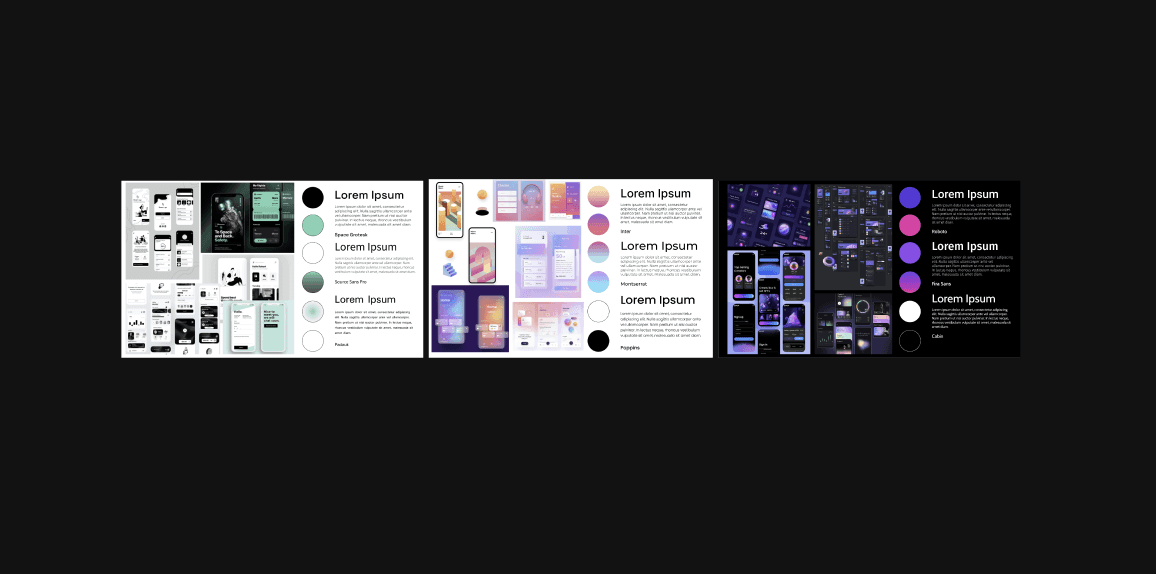
Built a dark-mode UI system to reduce visual noise and improve focus during early UX research.
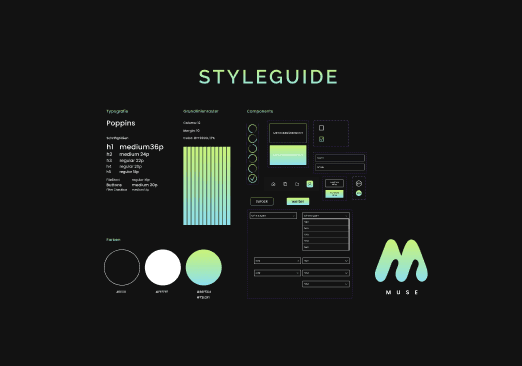
Created a modular design system with consistent color tokens, iconography, and components.
04 — Outcome/Learnings
Delivered a structured dark-mode MVP that simplifies research navigation and centralizes UX methods in one place.
Combined trends, methods, and tools into one fast, intuitive workflow — reducing research time and improving usability.
Validated interactions and flows through early testing, building scalable UI patterns for complex content.
Strengthened my UX strategy skills by designing an end-to-end process from research to prototype.